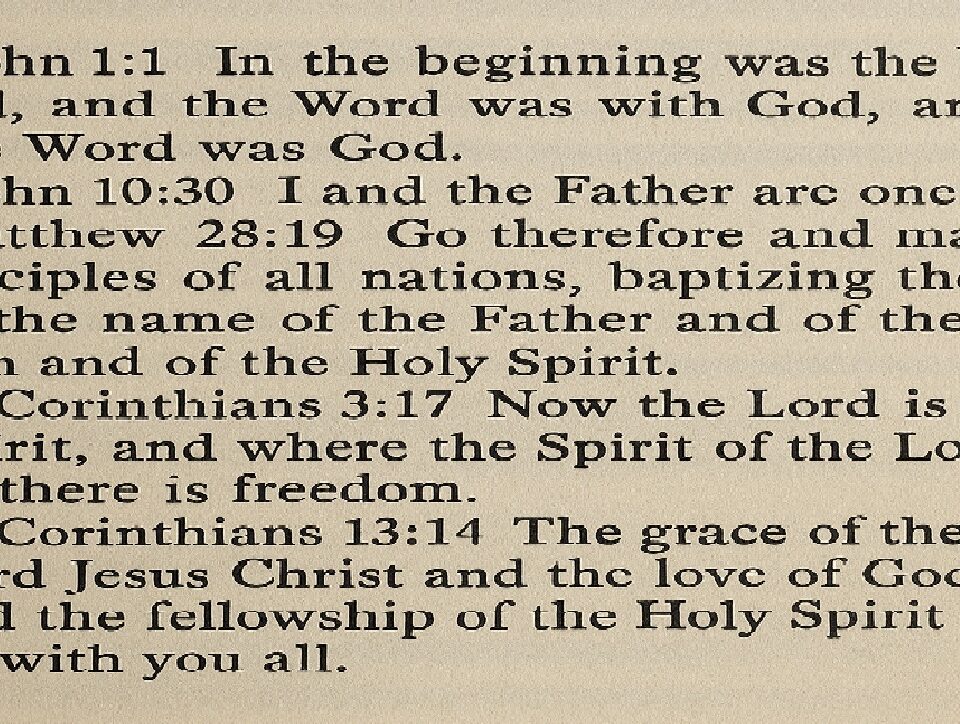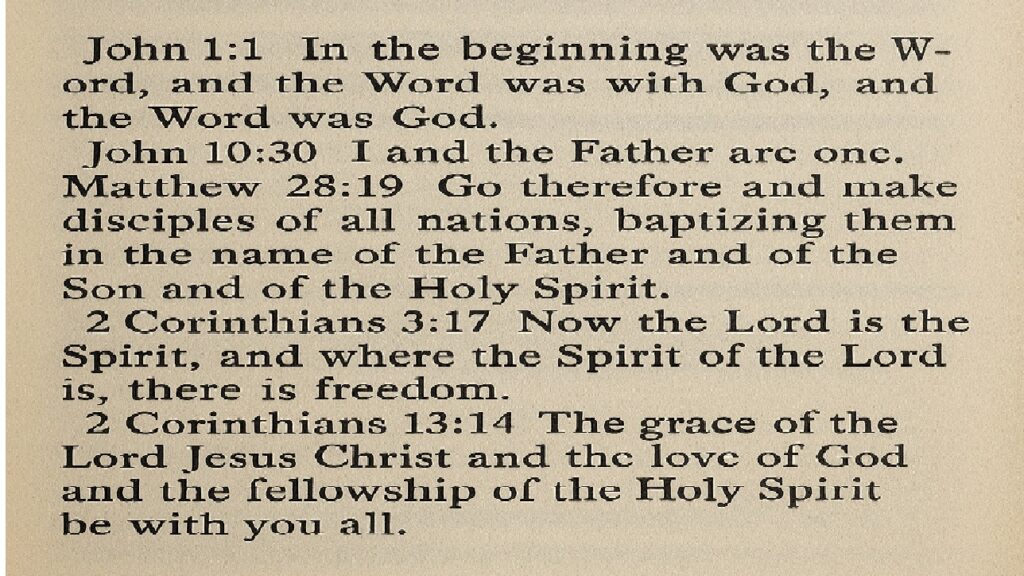
Jesus is God: Most-Cited Proof Texts
November 29, 2025The Roman Imperial Trinity

Few people realize that the doctrine of the Trinity was first enforced not by an ecclesiastical body, but by the Ancient Roman state. Many assume that Constantine the Great (306–337), who convened the First Council of Nicaea in 325, was responsible for imposing Trinitarian so-called “orthodoxy.”
But in reality, Constantine spent much of his later life supporting bishops with unitarian (Arian or semi-Arian) views, and even had his own sister baptized by an Arian bishop.1
The decisive shift occurred under Emperor Theodosius I (379–395), who made Nicene-Trinitarian Christianity the only legally recognized form of Christian faith. Beginning in 380, he issued a growing series of imperial laws that imposed civil, legal, and at times physical penalties on dissenters—especially Arians and other non-Nicene groups.
The pivotal moment came on 28 February 380, when Theodosius I and his co-emperors Gratian and Valentinian II issued the Edict of Thessalonica (Cunctos Populos). Addressed “to all the peoples,” it required every subject of the empire to profess the faith “handed down to the Romans by the Apostle Peter” and upheld by Pope Damasus of Rome and Bishop Peter of Alexandria:
“In accordance with the apostolic discipline and the evangelic doctrine, we shall believe in the single deity of the Father, the Son, and the Holy Spirit, under the concept of equal majesty and of the pious Trinity. We command that those persons who follow this rule shall embrace the name of Catholic Christians. The rest, however, whom we judge to be demented and insane, shall sustain the infamy of heretical dogmas; their meeting places shall not receive the name of churches, and they shall be smitten first by divine vengeance and secondly by the retribution of our hostility, which we shall assume in accordance with the divine judgment.”
With this decree, the Trinity became the official state religion, and all other Christian groups were branded as heretical. The immediate consequences for non-Nicenes were severe:
- They were barred from owning or using church buildings.
- They were prohibited from calling themselves “Christians” in any official sense.
- Public gatherings and non-Nicene liturgy were outlawed (including, in some cases, recitation of the Shema in synagogues).
- Violations could lead to arrest, fines, or confiscation of property.
- They lost legal protections and tax exemptions previously granted to recognized religious communities (even some pagan groups retained such rights longer).
Between 381 and 392, Theodosius issued additional laws that escalated persecution:
- Churches belonging to Arians and others were seized and transferred to Nicene bishops.
- Private homes used for non-Nicene worship were confiscated.
- Non-Nicene clergy were repeatedly exiled or deported, especially in Constantinople and the eastern provinces.
- Heavy fines were imposed for holding “heretical” meetings.
- Non-Nicene clergy were disqualified from making or receiving inheritances.
- They lost the right to sue or testify in court.
While corporal punishment and imprisonment were sometimes enforced—especially when clergy defied imperial orders—systematic execution for heresy was not yet part of Roman law under Theodosius. When death sentences occurred, they were typically tied to charges of treason or public disorder, not doctrinal deviation alone.
Systematic, legally regulated execution for heresy would emerge centuries later. The earliest known executions (such as Orléans in 1022, the mob killing of Peter of Bruys around 1131, and a Cathar burned at Béziers in 1149) were isolated incidents rather than state policy.
The first institutionalized mechanism appeared in the 13th century. The Fourth Lateran Council (1215) defined heresy as a crime against the state and required secular rulers to “exterminate” it within their territories. In 1231, Pope Gregory IX issued the bull Excommunicamus, establishing the papal Inquisition and decreeing that relapsed heretics, once abandoned by the Church, were to be handed over to secular authorities “to be punished with the due penalty”—a legal euphemism for execution, typically by burning someone alive.
Thus, although Theodosius I did not invent the doctrine of the Trinity, he used the full force of imperial power to impose it and to criminalize dissent. But he did lay the groundwork for judicial executions for doctrinal deviation that would become commonplace nearly 8 centuries later.
Thus, the precedent of state-enforced Christian so-called “Catholic Orthodoxy” had been set.
In the end, the triumph of the Trinity in the fourth century was not achieved through theological persuasion alone, but through imperial decision backed—like so many turning points in history—by the machinery of state power. This fusion of church and state would shape Christianity for more than a millennium, reminding us that some of its most cherished doctrines were once upheld not only by councils and scripture, but also by politicians, their soldiers, laws, and the suppression of those who interpreted the same scriptures differently.
- In private correspondence Dr. Rubenstein emailed “although Arianism was outlawed in the empire as it existed at the end of the 4th century, the tribes that were beginning to encroach on Roman territory did not accept the Trinitarian doctrine until their leaders, now ruling most of the Western empire, converted to Roman Catholicism in the 6th and 7th centuries.”
Recommended Ancient Sources
Codex Theodosianus (“Theodosian Code”)
Eusebius of Caesarea, Church History; Like of Constantine
Athanasius of Alexandria Letter on the Decrees of Nicaea (Epistola de Decretis; History of the Arians;
Modern Sources
Durant, The Story of Civilization, Vol. III: Caesar and Christ (1944)
Pelikan, The Christian Tradition, Vol. 1: The Emergence of the Catholic Tradition (100–600) (1971)
R. P. C. Hanson, The Search for the Christian Doctrine of God: The Arian Controversy, 318–381
J. N. D. Kelly, Early Christian Doctrines
William Kenneth Boyd, The Ecclesiastical Edicts of the Theodosian Code
Freeman, AD 381: Heretics, Pagans, and the Dawn of the Christian State
Rubenstein, When Jesus Became God