
Christology Before Chalcedon
November 29, 2025
The Roman Imperial Trinity
November 29, 2025Jesus is God: Most-Cited Proof Texts
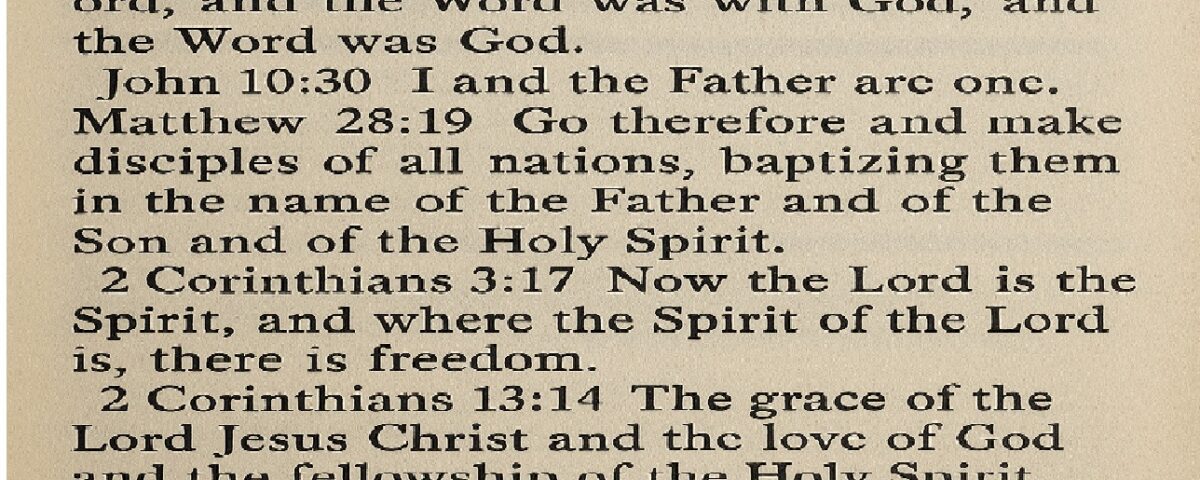
The doctrine that Jesus is God Himself is often presented as the clear, overwhelming teaching of the New Testament. Yet when the most frequently cited “proof-text” verses and passages are examined closely, they turn out to be far less convincing than popularly claimed. Even many leading Trinitarian scholars acknowledge significant linguistic, textual, contextual, and historical difficulties in the handful of verses. What follows is a rebuttal to most of the standard arguments, drawing on both scripture and admissions from respected Trinitarian authorities.
Jesus is called “God”
Dr. Murray J. Harris, in his popular evangelical work Jesus as God (1992), carefully examined every New Testament occurrence of the word “god” (theos, 1,315 times). His conclusion is striking:
“The application to Christ of the title theos is exceedingly rare, only 7 certain, very probable, or probable instances…Each contains 2 or 3 interpretative problems.”
Dr. Harris lists the difficulties as follows:
- Punctuation problems: John 1:1c; Romans 9:5
- Textual or grammatical problems: John 1:18; 20:28; 2 Peter 1:1; 2 Thessalonians 1:12; Titus 2:13; 1 John 5:20
- Contextual problems: Hebrews 1:8–9
In other words, even the strongest Trinitarian cases rest on a tiny cluster of grammatically disputed texts rather than on clear, repeated, unambiguous declarations.
It is also noteworthy how this title is used in the Old Testament.
Moses is explicitly made and called “God” (elohim) to Pharaoh (Exod 7:1) and Aaron (Exod 4:16). Post-biblical Jewish tradition, as well as Philo and Josephus, describes Moses as a theios anēr (“god-man”). Angels, judges, Israelite kings, and the Davidic Messiah are all called elohim or theos in Scripture without implying they share the divine essence. Calling Jesus theos therefore proves nothing as to his being God.
Moreover, the early church consistently reserved the title ho theos (“the God”) for the Father alone. Noted Catholic theologian Karl Rahner observed:
“The Father is regarded as God par excellence. [This] goes back to the first Christian communities, because it is based on Scripture itself.”
This same pattern appears in Justin Martyr, Irenaeus, Tertullian, Origen, and the Cappadocians, who generally viewed the Father as the absolute God or the divine ousia itself. It is why the Creed of Constantinople (381) still begins:
“We believe in one God, the Father Almighty, Maker of heaven and earth…”
John 1:1
Trinitarians insist that Jesus preexisted as “the Word [who] was with God” in John 1. But several observations undermine this reading.
First, in the Greek Old Testament (LXX), logos is never referred to with masculine pronouns (“he,” “him”). Some Trinitarian scholars (e.g., James Dunn, C. K. Barrett) seriously question whether the Logos is even personified in the OT, let alone a distinct person. And even if personified, we all know personification is not the same as an actual person (e.g., Wisdom in Proverbs 8-10).
Second, the preposition “with” (Gr. pros) with the accusative in John 1:1b is never used by John to describe one person being with another person; the Gospel always uses para for that. Things that are “with God” in John’s writings include condemnation (1 John 3:21). Therefore, in 1 John 1:1–2 the same author calls the logos a “what” and “which,” not a “who” or “he.” He then parallels it with “the eternal life which was with (pros) the Father”—clearly not a second divine person.
Finally, “the Word was God” can simply mean the spoken word of God, in the same way your own spoken word expresses you, yourself (cf. Deuteronomy 18:18–19, where God puts His words into the prophet so completely that rejecting the prophet is equivalent to rejecting God).
Micah 5:2; John 17:5
Verses such as Micah 5:2 (“whose origin is from ancient days”) and John 17:5 (“the glory I had with you before the world was”) are often cited as proof of personal pre-existence. Yet Micah 5:2 uses the same phrase (“days of old”) in 7:20 for God’s ancient promises to Jacob—clearly referring to foreknowledge and prophetic promise from Genesis 3:15 onward, not literal pre-existence.
Deuteronomy 18:18 explicitly says the coming prophet like Moses will be raised up “from among their brothers”—a human Israelite, not a non-human person from eternity.
Many older Trinitarian commentators (e.g., The Pulpit Commentary) openly called the idea of “eternal generation of the Son” a “theological fiction” and “philosophical absurdity.”
John 17:5 and 17:24 use typical Jewish idiomatic language for something decreed or “given” in God’s plan before creation (the same wording appears in 17:22 for the glory given to the disciples).
Philippians 2:6–11
The passage contains numerous verbal echoes from the Suffering Servant songs of Isaiah:
- “form of a man” (Phil 2:7); Isaiah 52:14 LXX “form of a man”;
- “poured out”/“emptied himself” (Phil 2:7); Isaiah 53:12 “poured out his soul”;
- “humbled…death” (Phil 2:8); cp. death of the Servant in Isaiah 53:3–8;
- “highly exalted” (Phil 2:9); Isaiah 52:13 “my servant shall be highly exalted”;
The entire hymn celebrates the obedient human Servant who, because of his humility, is exalted to the highest place “to the glory of God the Father.”
Since the 1960s, scholars have also recognized a strong Adam-Christ typology running through the passage. The first Adam grasped at equality with God (Gen 3); the last Adam refused to grasp and instead emptied himself in obedience (Rom 5:12–21; 1 Cor 15:45–47). As Dr. James Dunn notes:
“As 1 Cor 15:45ff. insists, the temporal order is clear: Adam first, Christ second. Adam was not a copy of a pre-existent Christ, but a type of him who was to come.”
“Yahweh Texts” Applied to Jesus
In the Old Testament, the authorized agent of Yahweh is frequently addressed or described as Yahweh himself (the law of agency: “a man’s agent is like the man himself”). Examples include:
- Moses says “I have led you through the desert for forty years…all so that you might know that I am the Lord your God!” (Deut 29:5-6);
- Joshua presents himself “as YHWH” (Josh 24:1–2);
- Samuel gathers Israel “as YHWH” (1 Sam 10:17–22);
- The promised prophet speaks “in the name of YHWH” (Deut 18:19–22);
- Yahweh is the “light to the nations” (Isa 51:4), yet His human servants are also called “light to the nations” (Isa 42:6; 49:6; Matt 5.14; Acts 13:47).
Applying a “Yahweh text” to Jesus therefore follows the same biblical pattern of agency and does not require that Jesus is Yahweh himself.
Conclusion
When the standard Trinitarian “proof-texts” are examined without presupposition, they consistently admit alternative interpretations that are grammatically simpler, contextually more natural, and historically more aligned with Jewish monotheism and early Christian worship patterns.
The New Testament nowhere explicitly states that Jesus is “the one God” or the second person of the Trinity who “became man,” i.e., assumed or took on flesh. Instead, it presents Jesus as the highly exalted human Messiah, the unique Son who perfectly reveals the Father, the authorized agent who speaks and acts in the Father’s name, and the non-deity figure David calls “my lord” (adoni) told to sit at God’s right hand. This aligns with the picture painted by the Old Testament and affirmed by the earliest Christian creeds, which call the Father alone “the one God” or “true God.”
The evidence does not demand that Jesus is God; rather, it points to a man whom God has made “both lord and Messiah” (Acts 2:36).


Signature: YLnQvfddA2MpNbRD5eQ6rDm65YEl/n6q8Gt96f/bJ8VtPGewgxlxjb6Zg1AmwmNGs2XFSBBKedheDop43SyiV0Ev/kXIuXJ0qdxgfRkRqJqE8dzr1o0sIqvqjtTKi3/CO5lJLXye1eD0uH4Uaz75R4e5omhEpD716ZGGmxqUEsTiIYp5frNuVPIs13wwezvQDf1dL6s3vFE9tOD2EwFMWlH2PfwpVNJ2WDPTJiCWoPs92OZ8ndCk1YbQs+a5xYQm/Cb1IRJB/9xxKcMvbrikqns7yK9ki7DmUxwOrMxDA1TzQqu6eKCq9dMAzCyyaimKXN6vDPA2QTSQSHcs2/XzD24gheKgmbbq5/lCmUf1RWBL1xtL71kYB+JXPlroLzvx4aysGOg1rd4/I4liBNjVIfhrmMKX1TeSK3nDJGqHw4cS+l7vSGzRkA9Qf+Mx8Ql1XwonDFYpaYz5M5ZdYy/j7Hb9iLQuqNLycln1UUQV27QLgkrsKnPnhgFO9X18Zbohbq4T5mt7IEgE9nfe5HEEX7ABx9QW5+c37Gb+tg+/1CZ4cx51nbLiZduq9q7NqKUtX9ypyg2Ci2FZvx8qQULni99LwpB2vcnzta8Dg3AyRYFm986mQbZRmw8YESg+f+12dMb7Nj5BaUe9YmPRTbmatiX7IbjXJzaz1HdMblGtxJwt9/eg8IC7riANPVpzdrKssQH67X/dvrzfPPKO8ZAjzBB0d6sTKZu7UnauBWWqfHEmfRWjeeWcIbZqtY0Kf9G64uWjPGaMGu5wF09EWZ9T5WiZKtwykW9Jld/H/lH2XJqoeDrGpe9tNIIS3dXWB9Xq/8a26h1fzWaRgCIiCaw6kArCvSuhZVfJHdMRgT1zacKyIOb37NYcsGzlFDKjsaW0D51opdJPmssaIywaDn/tmnuIJITlav8EVr5rL5zsoxeFlJX4wN0DRcc8Ghsq8gct