
Look, Ma—No HANDS!
September 8, 2026
Yahweh at your right hand
October 7, 2026David calls his son “my lord”
Signature: YLnQvfddA2MpNbRD5eQ6rDm65YEl/n6q8Gt96f/bJ8VtPGewgxlxjb6Zg1AmwmNGs2XFSBBKedheDop43SyiV0Ev/kXIuXJ0qdxgfRkRqJqE8dzr1o0sIqvqjtTKi3/CO5lJLXye1eD0uH4Uaz75R4e5omhEpD716ZGGmxqUEsTiIYp5frNuVPIs13wwezvQDf1dL6s3vFE9tOD2EwFMWlH2PfwpVNJ2WDPTJiCWoPs92OZ8ndCk1YbQs+a5xYQm/Cb1IRJB/9xxKcMvbrikqns7yK9ki7DmUxwOrMxDA1TzQqu6eKCq9dMAzCyyaimKXN6vDPA2QTSQSHcs2/XzD24gheKgmbbq5/lCmUf1RWBL1xtL71kYB+JXPlroLzvx4aysGOg1rd4/I4liBNjVIfhrmMKX1TeSK3nDJGqHw4cS+l7vSGzRkA9Qf+Mx8Ql1XwonDFYpaYz5M5ZdYy/j7Hb9iLQuqNLycln1UUQV27QLgkrsKnPnhgFO9X18Zbohbq4T5mt7IEgE9nfe5HEEX7ABx9QW5+c37Gb+tg+/1CZ4cx51nbLiZduq9q7NqKUtX9ypyg2Ci2FZvx8qQULni99LwpB2vcnzta8Dg3AyRYFm986mQbZRmw8YESg+f+12dMb7Nj5BaUe9YmPRTbmatiX7IbjXJzaz1HdMblGtxJwt9/eg8IC7riANPVpzdrKssQH67X/dvrzfPPKO8ZAjzBB0d6sTKZu7UnauBWWqfHEmfRWjeeWcIbZqtY0Kf9G64uWjPGaMGu5wF09EWZ9T5WiZKtwykW9Jld/H/lH2XJqoeDrGpe9tNIIS3dXWB9Xq/8a26h1fzWaRgCIiCaw6kArCvSuhZVfJHdMRgT1zacKyIOb37NYcsGzlFDKjsaW0D51opdJPmssaIywaDn/tmnuIJITlav8EVr5rL5zsoxeFlJX4wN0DRcc8Ghsq8gct
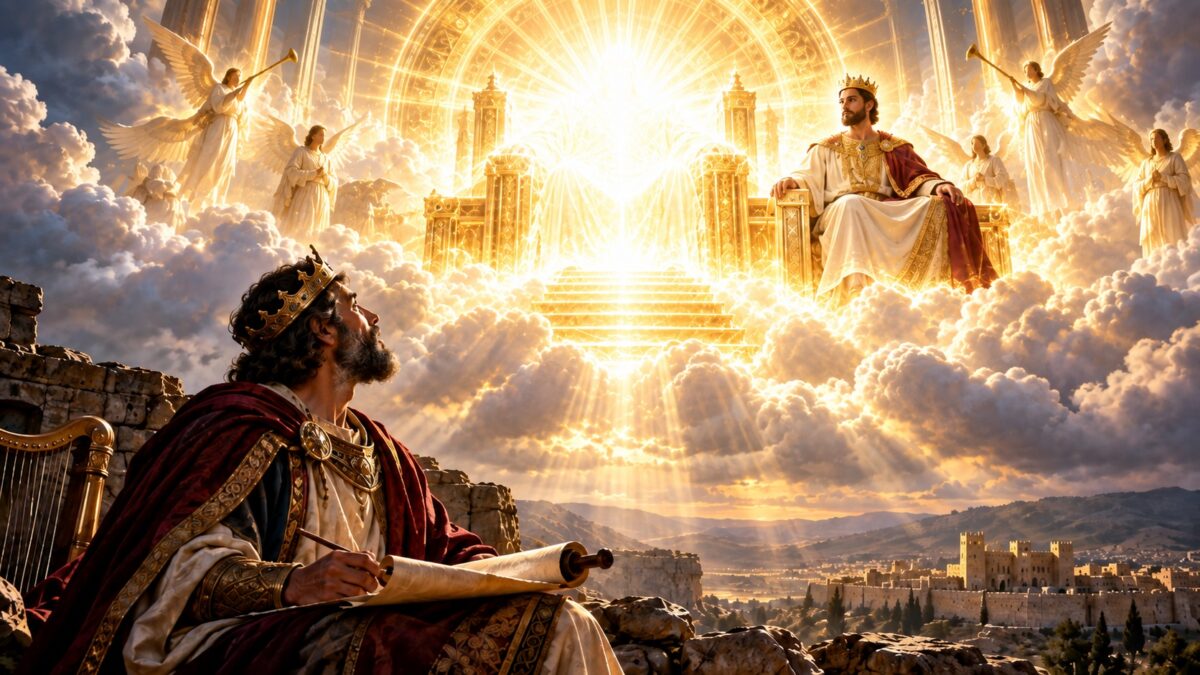
In Matthew 22:41-46, Jesus asks the Pharisees: If the Messiah is the son of David, how is it that David calls him “Lord” in Psalm 110:1?
The answer is not that David’s son is Yahweh. The Psalm actually distinguishes between the two lords in the vision. The first is identified by the unique Divine Hebrew Name, Yahweh, Who is speaking to someone David calls “my lord.” That Hebrew word is never used for Yahweh Himself, who has placed David’s lord in a position superior to him. This is exactly how the NT understood the Psalm in reference to Jesus’ “super-exaltation” after his resurrection from the dead.
In Acts 2 Peter explains “to the whole house of Israel with certainty” how “this Jesus whom you crucified, God has made both lord and Messiah” (Acts 2:36). The distinction is further made clear by the fact that he is called lord Messiah, that is God’s anointed human person. Compare also Acts 5:30-31, where “the God of our fathers” raises Jesus from the dead and exalts him to His right hand as Leader and Savior, the same with Philippians 2:9-11.
Psalm 110:4 also explains how David’s son, enthroned at God’s right hand, is His uniquely appointed High Priest. The letter to the Hebrews repeatedly emphasizes that Jesus did not appoint himself to this office (Heb. 5:4). For the Messiah “did not glorify himself to become a high priest”; God appointed him, with Hebrews appealing first to Psalm 2:7 and then to Psalm 110:4 (Heb. 5:5-6). Hebrews 7:11-22 develops the point further by describing how Jesus’ priesthood does not derive from the house of Levi established under the Law of Moses. The Messiah comes from Judah (Heb. 7:13-14), and is made high priest according to God’s oath in Psalm 110 (Heb. 7:21).
This fulfills key Messianic promises concerning David’s descendant, such as 2 Samuel 7:12, 14 and Psalm 2:7, themes echoed by the angel Gabriel in Luke 1. Gabriel tells Mary that her miraculously procreated human son will receive “the throne of his ancestor David” and, because of God’s creative action in his conception, “the holy child to be begotten will be called the Son of God” (Luke 1:32, 35).
So there is no contradiction, let alone a so-called “mystery,” in Jesus being both David’s son and David’s lord. He is David’s son according to his human descent (Rom. 1:3; 2 Tim. 2:8), but David’s superior and master according to the extraordinary authority Yahweh has bestowed upon His Messiah.
God raises him from the dead, seats him at His right hand, subjects all things beneath him, and appoints him the “forever High Priest after the order of Melchizedek” (Acts 2:32-36; 1 Cor. 15:24-28; Heb. 7:20-28; 10:12-13).
Psalm 110 therefore does not collapse Yahweh and the Messiah into one Yahweh, let alone introduce another Yahweh. Such a reading would conflict with the cherished Jewish-Christian creed known as the Shema of Deuteronomy 6:4, which Jesus himself reaffirmed in Mark 12:29.
Simply put, David’s son is also his superior and lord because the one God, Yahweh, has appointed and exalted him as His uniquely procreated human Messiah, King, and High Priest of the coming Kingdom of God on a restored earth.

Signature: YLnQvfddA2MpNbRD5eQ6rDm65YEl/n6q8Gt96f/bJ8VtPGewgxlxjb6Zg1AmwmNGs2XFSBBKedheDop43SyiV0Ev/kXIuXJ0qdxgfRkRqJqE8dzr1o0sIqvqjtTKi3/CO5lJLXye1eD0uH4Uaz75R4e5omhEpD716ZGGmxqUEsTiIYp5frNuVPIs13wwezvQDf1dL6s3vFE9tOD2EwFMWlH2PfwpVNJ2WDPTJiCWoPs92OZ8ndCk1YbQs+a5xYQm/Cb1IRJB/9xxKcMvbrikqns7yK9ki7DmUxwOrMxDA1TzQqu6eKCq9dMAzCyyaimKXN6vDPA2QTSQSHcs2/XzD24gheKgmbbq5/lCmUf1RWBL1xtL71kYB+JXPlroLzvx4aysGOg1rd4/I4liBNjVIfhrmMKX1TeSK3nDJGqHw4cS+l7vSGzRkA9Qf+Mx8Ql1XwonDFYpaYz5M5ZdYy/j7Hb9iLQuqNLycln1UUQV27QLgkrsKnPnhgFO9X18Zbohbq4T5mt7IEgE9nfe5HEEX7ABx9QW5+c37Gb+tg+/1CZ4cx51nbLiZduq9q7NqKUtX9ypyg2Ci2FZvx8qQULni99LwpB2vcnzta8Dg3AyRYFm986mQbZRmw8YESg+f+12dMb7Nj5BaUe9YmPRTbmatiX7IbjXJzaz1HdMblGtxJwt9/eg8IC7riANPVpzdrKssQH67X/dvrzfPPKO8ZAjzBB0d6sTKZu7UnauBWWqfHEmfRWjeeWcIbZqtY0Kf9G64uWjPGaMGu5wF09EWZ9T5WiZKtwykW9Jld/H/lH2XJqoeDrGpe9tNIIS3dXWB9Xq/8a26h1fzWaRgCIiCaw6kArCvSuhZVfJHdMRgT1zacKyIOb37NYcsGzlFDKjsaW0D51opdJPmssaIywaDn/tmnuIJITlav8EVr5rL5zsoxeFlJX4wN0DRcc8Ghsq8gct