

The Root, Offspring of David
May 25, 2026
The Antichrist Test
July 7, 2026From Enoch to Jesus & “spirits in prison”
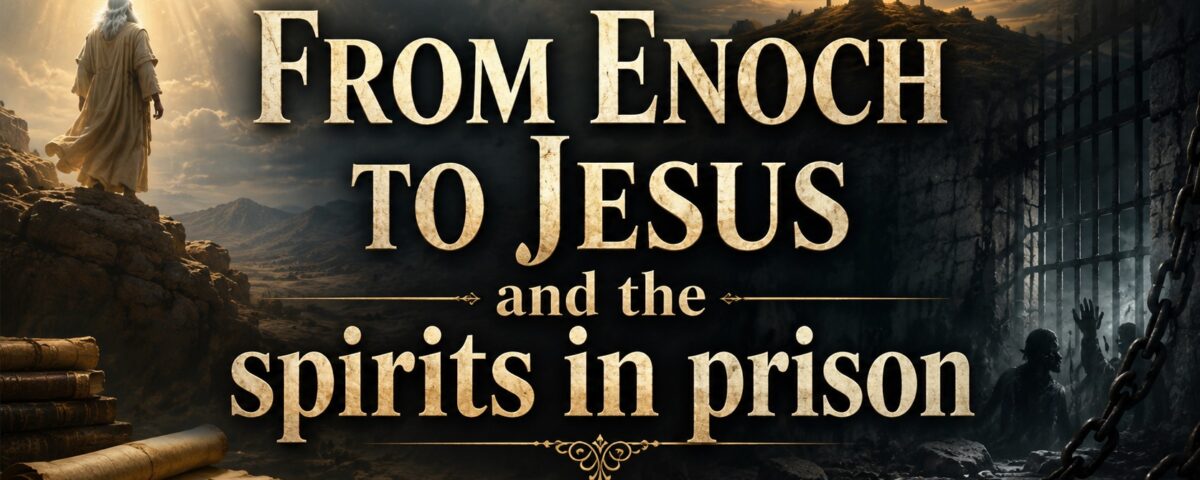
To understand 1 Peter 3:18–20, we must first understand biblical typology. In Scripture, a “type” is an earlier person, event, or institution that foreshadows a later and greater reality. Paul says Adam “was a type [typos] of the one who was to come,” namely Jesus (Rom. 5:14). Hebrews 7 presents Melchizedek, the priest-king from Genesis 14, as a type of the ultimate High Priest now exalted in heaven: Jesus the Messiah. In a similar way, Peter appears to draw on the figure of Enoch as a type of the resurrected Messiah.
In the Jewish work known as 1 Enoch, written at least two centuries before Jesus, Enoch is sent by God to announce judgment on the imprisoned fallen angels known as the Watchers. These beings are associated with the “sons of God” in Genesis 6:1–4, whose rebellion led to their imprisonment deep beneath the earth. This background helps explain Peter’s statement that Jesus, after being “made alive again by resurrection in the spirit,” went “in this resurrected condition” and “made a proclamation to the spirits in prison, who in the past were disobedient, at the time when God waited patiently in the days of Noah while the ark was being built” (1 Pet. 3:18–20).
Peter is not describing Jesus offering salvation to dead human beings. Jesus did nothing while he was dead. It was after he was “made alive”—which in other passages means resurrection from the dead (1 Sam. 2:6; 2 Kings 5:7; 1 Cor. 15:22)—that he announced his triumph over death to fallen spirits; that is, angels who were disobedient in the days of Noah, when eight human beings were rescued in the ark. Thus, in his resurrected state, after being dead for three days, from Friday to Sunday, Jesus proclaimed his triumph to the angels who had sinned in the time of Noah (Gen. 6:1–5).
This is why the Genesis 6 background is so important. Jesus’ proclamation was not evangelism but a victory announcement. He declared that “God’s plan of salvation and kingdom rule had not been derailed—in fact, it was right on schedule. The crucifixion actually meant victory over every demonic force opposed to God.” This explains why 1 Peter 3 ends with Jesus raised from the dead, seated at God’s right hand, and placed “above all angels, authorities and powers.” The parallel to Enoch’s own mission is striking.
In 1 Enoch, the Watchers appeal their sentence and ask Enoch to intercede for them. God rejects their petition, and Enoch must return to the imprisoned Watchers with the announcement of their doom:
“You will have no peace. A great sentence has gone forth against you to bind you. You will have no relief or petition because of the unrighteous deeds that you have revealed, because of all the godless deeds and the unrighteousness and the sin that you revealed to men” (1 Enoch 13).
Enoch then speaks to the imprisoned spirits, and fear seizes them.
Just as Enoch announced judgment to the Watchers, in 1 Peter 3 the risen Jesus announces his victory to the imprisoned rebellious spirits. The difference is that Jesus is greater than Enoch. He is not merely a prophetic messenger; he is the resurrected Messiah, exalted by God and vindicated over every hostile power.
Peter repeats the same idea in his second letter:
“God did not spare angels when they sinned, but cast them into Tartarus and committed them to chains of gloomy darkness, to be kept until judgment” (2 Pet. 2:4).
“Tartarus” here is not the popular idea of “hell” as a place where dead humans are tormented forever and ever. It refers to a special place of confinement for fallen angels awaiting final judgment.
So 1 Peter 3:18–20 is not about Jesus preaching to disembodied human souls while he was dead. It is about the risen Messiah proclaiming victory over the rebellious spiritual powers behind the ancient corruption of Genesis 6. Peter’s point is triumphant: the death and resurrection of Jesus did not represent defeat. They were God’s victory over the very powers that had opposed His purposes from ancient times.
The message is deliberate and cosmic in scope: Jesus has been raised, exalted, and placed at God’s right hand, with all angels, authorities, and powers now subjected to him.

Signature: YLnQvfddA2MpNbRD5eQ6rDm65YEl/n6q8Gt96f/bJ8VtPGewgxlxjb6Zg1AmwmNGs2XFSBBKedheDop43SyiV0Ev/kXIuXJ0qdxgfRkRqJqE8dzr1o0sIqvqjtTKi3/CO5lJLXye1eD0uH4Uaz75R4e5omhEpD716ZGGmxqUEsTiIYp5frNuVPIs13wwezvQDf1dL6s3vFE9tOD2EwFMWlH2PfwpVNJ2WDPTJiCWoPs92OZ8ndCk1YbQs+a5xYQm/Cb1IRJB/9xxKcMvbrikqns7yK9ki7DmUxwOrMxDA1TzQqu6eKCq9dMAzCyyaimKXN6vDPA2QTSQSHcs2/XzD24gheKgmbbq5/lCmUf1RWBL1xtL71kYB+JXPlroLzvx4aysGOg1rd4/I4liBNjVIfhrmMKX1TeSK3nDJGqHw4cS+l7vSGzRkA9Qf+Mx8Ql1XwonDFYpaYz5M5ZdYy/j7Hb9iLQuqNLycln1UUQV27QLgkrsKnPnhgFO9X18Zbohbq4T5mt7IEgE9nfe5HEEX7ABx9QW5+c37Gb+tg+/1CZ4cx51nbLiZduq9q7NqKUtX9ypyg2Ci2FZvx8qQULni99LwpB2vcnzta8Dg3AyRYFm986mQbZRmw8YESg+f+12dMb7Nj5BaUe9YmPRTbmatiX7IbjXJzaz1HdMblGtxJwt9/eg8IC7riANPVpzdrKssQH67X/dvrzfPPKO8ZAjzBB0d6sTKZu7UnauBWWqfHEmfRWjeeWcIbZqtY0Kf9G64uWjPGaMGu5wF09EWZ9T5WiZKtwykW9Jld/H/lH2XJqoeDrGpe9tNIIS3dXWB9Xq/8a26h1fzWaRgCIiCaw6kArCvSuhZVfJHdMRgT1zacKyIOb37NYcsGzlFDKjsaW0D51opdJPmssaIywaDn/tmnuIJITlav8EVr5rL5zsoxeFlJX4wN0DRcc8Ghsq8gct