
Yahweh at your right hand
October 7, 2026What did the son know & when did he know it?
Signature: YLnQvfddA2MpNbRD5eQ6rDm65YEl/n6q8Gt96f/bJ8VtPGewgxlxjb6Zg1AmwmNGs2XFSBBKedheDop43SyiV0Ev/kXIuXJ0qdxgfRkRqJqE8dzr1o0sIqvqjtTKi3/CO5lJLXye1eD0uH4Uaz75R4e5omhEpD716ZGGmxqUEsTiIYp5frNuVPIs13wwezvQDf1dL6s3vFE9tOD2EwFMWlH2PfwpVNJ2WDPTJiCWoPs92OZ8ndCk1YbQs+a5xYQm/Cb1IRJB/9xxKcMvbrikqns7yK9ki7DmUxwOrMxDA1TzQqu6eKCq9dMAzCyyaimKXN6vDPA2QTSQSHcs2/XzD24gheKgmbbq5/lCmUf1RWBL1xtL71kYB+JXPlroLzvx4aysGOg1rd4/I4liBNjVIfhrmMKX1TeSK3nDJGqHw4cS+l7vSGzRkA9Qf+Mx8Ql1XwonDFYpaYz5M5ZdYy/j7Hb9iLQuqNLycln1UUQV27QLgkrsKnPnhgFO9X18Zbohbq4T5mt7IEgE9nfe5HEEX7ABx9QW5+c37Gb+tg+/1CZ4cx51nbLiZduq9q7NqKUtX9ypyg2Ci2FZvx8qQULni99LwpB2vcnzta8Dg3AyRYFm986mQbZRmw8YESg+f+12dMb7Nj5BaUe9YmPRTbmatiX7IbjXJzaz1HdMblGtxJwt9/eg8IC7riANPVpzdrKssQH67X/dvrzfPPKO8ZAjzBB0d6sTKZu7UnauBWWqfHEmfRWjeeWcIbZqtY0Kf9G64uWjPGaMGu5wF09EWZ9T5WiZKtwykW9Jld/H/lH2XJqoeDrGpe9tNIIS3dXWB9Xq/8a26h1fzWaRgCIiCaw6kArCvSuhZVfJHdMRgT1zacKyIOb37NYcsGzlFDKjsaW0D51opdJPmssaIywaDn/tmnuIJITlav8EVr5rL5zsoxeFlJX4wN0DRcc8Ghsq8gct
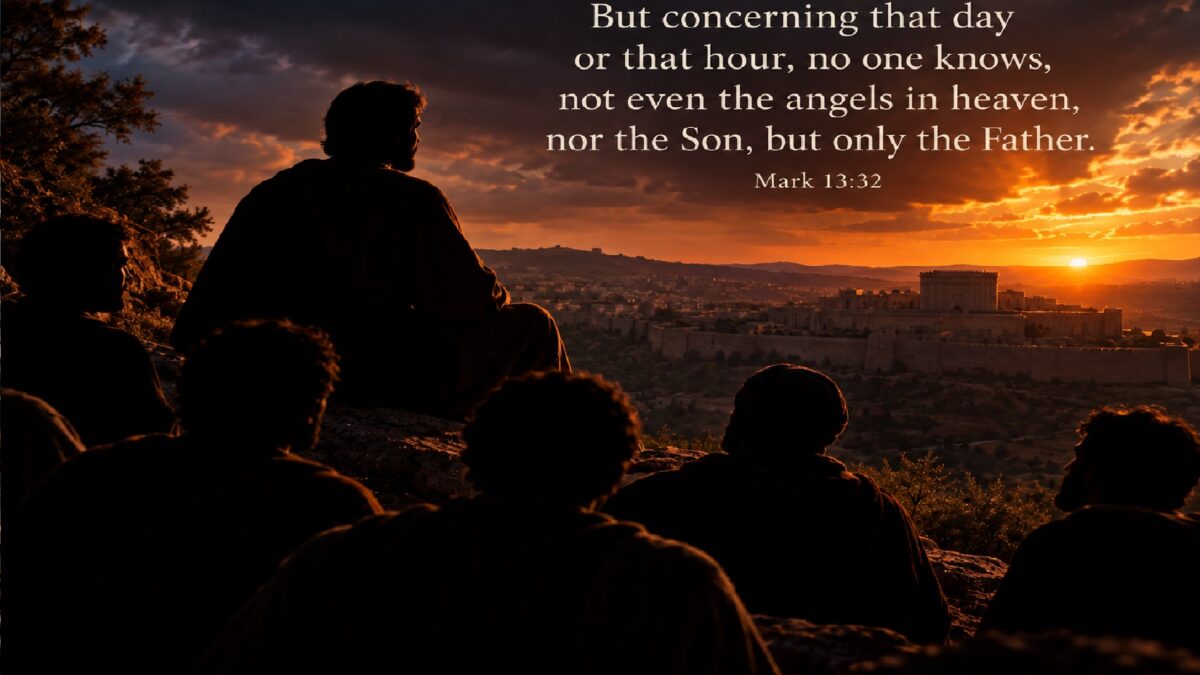
Some argue that the Son in Mark 13:32 is using a so-called Jewish wedding idiom. In that custom, the son prepared a place for his bride, but only the father decided when the preparations were complete and when the son could go to receive her. So when Jesus said, “nor the Son, but only the Father,” they claim he did not mean that he lacked knowledge, but only that the Father had authority to announce the time. But that interpretation does not remove the plain meaning of Jesus’ words.
The text says, “about that day or hour no one knows…nor the Son, but only the Father” (Mark 13:32). Jesus did not merely say that the Father chooses the time. The wedding idiom cannot turn “the Son does not know” into “the Son really does know.” Furthermore, Mark 13:32 is not an isolated example of the Son not knowing certain things.
Scripture repeatedly describes the Son, who by definition is subordinate to the one God, receiving knowledge and revelation from the Father, which means he is not omniscient.
Luke says “the child continued to grow and become strong, being filled with wisdom” and increased “in wisdom and stature, and in favor with God and men.” (Luke 2.40, 52)To increase in wisdom means he did not possess unlimited wisdom from birth. He grew, learned, matured, and developed as a real human son. This is real mental development, not natural omniscience. In Mark 5:9 and Luke 8:30, Jesus asks the name of the demon called Legion. In Mark 9:16, he asks what certain people are arguing about. In Luke 8:45 and Mark 5:30, he asks who touched him. The same pattern appears in John, the favorite Gospel of literal preexistence proponents.
In John 8:28, the Son says, “I do nothing on my own initiative, but I speak these things just as the Father taught me.” If the Son is all-knowing, what need is there for him to be taught anything? Similarly, in John 12:49, Jesus says that the Father gave him the commandment about what to say. The Son does not speak from independent omniscience, but by commission. In John 11:34, he asks where Lazarus was buried. In John 21:17, he asks Peter three times whether he loves him. Most telling of all, Revelation 1:1, after Jesus’ resurrection and exaltation, says: “The revelation of Jesus Messiah, which God gave him…” God gave revelation to Jesus, meaning the exalted Jesus still receives knowledge from God.
In the same way, in Acts 1:7, Jesus tells his apostles, “It is not for you to know times or seasons which the Father has fixed by His own authority.” The timing of the Kingdom belongs to the Father’s own authority. This harmonizes perfectly with Mark 13:32 and Matthew 24:36, where the Greek phrase ei mē ho patēr monos means “except the Father alone.” Matthew’s wording makes the Father the sole exception to the statement that no one knows the day or hour. Regardless of how one resolves the textual variant concerning the presence or absence of “nor the Son,” the phrase “the Father alone” serves the same clarifying function.
Lastly, Hebrews 5:8 says the Son learned “obedience from the things which he suffered.” An omniscient Son cannot truly learn anything if, by nature, he already knows all things.
The fact is that the Jewish wedding-idiom imagery cannot do away with the clear, unambiguous words of the Son in Mark 13:32, words supported by the totality of New Testament Scripture. Even in the wedding picture, the father authorizes, the son/bridegroom waits, and the bride prepares. That is not coequal omniscience with the Father; it is delegated authority.
The son is on a need to know basis only!
Scripture teaches that the Son’s knowledge, words, actions, authority, and revelation are given to him by the one God, his Father.

Signature: YLnQvfddA2MpNbRD5eQ6rDm65YEl/n6q8Gt96f/bJ8VtPGewgxlxjb6Zg1AmwmNGs2XFSBBKedheDop43SyiV0Ev/kXIuXJ0qdxgfRkRqJqE8dzr1o0sIqvqjtTKi3/CO5lJLXye1eD0uH4Uaz75R4e5omhEpD716ZGGmxqUEsTiIYp5frNuVPIs13wwezvQDf1dL6s3vFE9tOD2EwFMWlH2PfwpVNJ2WDPTJiCWoPs92OZ8ndCk1YbQs+a5xYQm/Cb1IRJB/9xxKcMvbrikqns7yK9ki7DmUxwOrMxDA1TzQqu6eKCq9dMAzCyyaimKXN6vDPA2QTSQSHcs2/XzD24gheKgmbbq5/lCmUf1RWBL1xtL71kYB+JXPlroLzvx4aysGOg1rd4/I4liBNjVIfhrmMKX1TeSK3nDJGqHw4cS+l7vSGzRkA9Qf+Mx8Ql1XwonDFYpaYz5M5ZdYy/j7Hb9iLQuqNLycln1UUQV27QLgkrsKnPnhgFO9X18Zbohbq4T5mt7IEgE9nfe5HEEX7ABx9QW5+c37Gb+tg+/1CZ4cx51nbLiZduq9q7NqKUtX9ypyg2Ci2FZvx8qQULni99LwpB2vcnzta8Dg3AyRYFm986mQbZRmw8YESg+f+12dMb7Nj5BaUe9YmPRTbmatiX7IbjXJzaz1HdMblGtxJwt9/eg8IC7riANPVpzdrKssQH67X/dvrzfPPKO8ZAjzBB0d6sTKZu7UnauBWWqfHEmfRWjeeWcIbZqtY0Kf9G64uWjPGaMGu5wF09EWZ9T5WiZKtwykW9Jld/H/lH2XJqoeDrGpe9tNIIS3dXWB9Xq/8a26h1fzWaRgCIiCaw6kArCvSuhZVfJHdMRgT1zacKyIOb37NYcsGzlFDKjsaW0D51opdJPmssaIywaDn/tmnuIJITlav8EVr5rL5zsoxeFlJX4wN0DRcc8Ghsq8gct