
“Church Father” Philo
September 26, 2025
Jesus is God: Most-Cited Proof Texts
November 29, 2025Christology Before Chalcedon
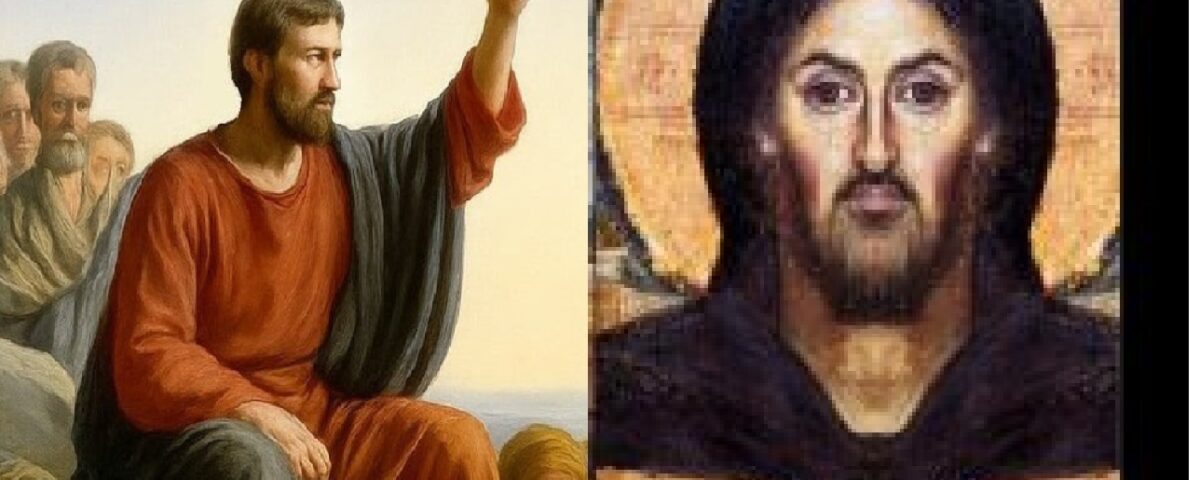
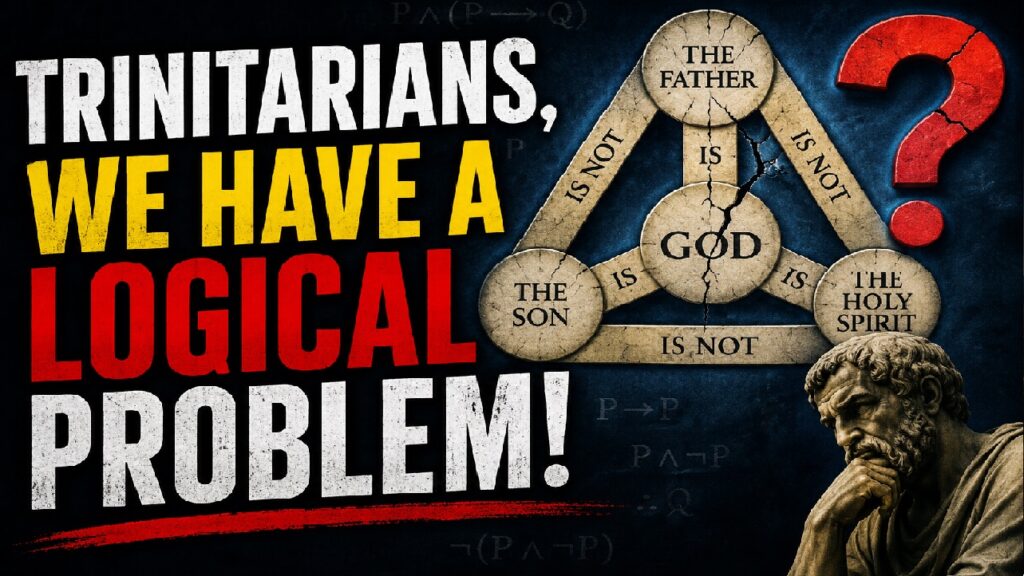
The idea that Jesus had two natures—one fully God and one fully human, turning him into the “God-man”—is not taught in the New Testament. This doctrine was developed hundreds of years later and officially declared at the Council of Chalcedon in AD 451. The dogma became central to the doctrine of the Trinity, the one God eternally exists as three distinct but co-equal and co-eternal persons: the Father, the Son (Jesus), and the Holy Spirit.
But in the New Testament itself, Jesus consistently points to the Father alone as “the only true God” (John 17:3). He also affirms the Shema, the central ancient confession of Israel that Jesus quotes verbatim as: “The LORD our God is one LORD” (Mark 12:29–30). Because of this, the New Testament writers never call Jesus a “God-man.” They call him a man, the Son of Man, i.e., a human person who is the promised Messiah, the Son of God. These are all well-known Messianic titles for the seed or descednant of David who would restore the Kingdom to Israel (Acts 1:6).
The Old Testament prophecies most frequently cited in the New Testament—Psalm 110:1 and Daniel 7:13–14—also describe the Messiah as a human person, always distinct, set apart from the one God Himself.
- Psalm 110:1 shows the LORD, YHWH speaking to someone who is not YHWH: “YHWH said to my lord,” Heb. adoni never used for YHWH;
- Daniel 7 presents “one like a son of man” that is a human person coming before the Ancient of Days again YHWH and receiving authority from Him.
These texts support the idea of a human Messiah exalted and empowered by God, not some preexistent, “God the Son” Person in human flesh.
Jesus speaks as someone who is genuinely dependent on the Father:
- “The Son can do nothing of his own accord” (John 5:19).
- “The Father is greater than I” (John 14:28).
- “I live because of the Father” (John 6:57).
He even admits things an omniscient God would know: the day and hour of his coming (Mark 13:32), who touched him in the crowd (Mark 5:30–32), or (in the parallel account) the identity of certain demons. The New Testament adds that as a child the Son “grew in wisdom” (Luke 2:52). These are all obvious limitations a “God-man” with an eternally omniscient divine nature would not actually experience or not know.
The virgin-birth narratives in Matthew and Luke describe his origin by procreation, i.e., “begotten” by God’s spirit in Mary’s womb—not as a pre-existing eternal being who entered Mary’s womb in order to assume or take on flesh, a human body (as later so-called Church Fathers and post-creeds describe).
The human origin story aligns with the many verses that say the Son of God died (John 3:16; Rom 5:10; 1 Cor 15:3–4). An eternally divine being, by definition, cannot die.
The Council of Chalcedon (451) attempted to resolve these tensions by declaring Jesus one person with two natures: fully God and fully man. Later Trinitarian theology went further, insisting that Jesus’ humanity was “impersonal”—that is, Jesus was never really a human person, only a divine eternal person with an added human nature. This creates serious problems.
When the Bible calls Jesus “a man,” “the Son of Man,” or simply “Jesus,” these statements are said to refer only to his human nature, not to the person speaking. That means when Jesus says:
- “Why do you call me good? No one is good except God alone” (Mark 10:18),
- “The Father is greater than I” (John 14:28), or
- “About that day or hour no one knows…not even the Son” (Mark 13:32), according to Chalcedon we are supposedly hearing only his human nature talking, not his (divine) person.
But that would turn Jesus into a liar. It also undermines the biblical doctrine of mediation. Scripture insists our mediator must be a real human being:
“For there is one God and one mediator between that one God and humanity, Messiah Jesus, who is himself human.” (1 Timothy 2:5)
A “God the Son” eternal Person who has merely assumed or taken on humanity (like a costume) cannot truly represent humanity. Some know the phrase “no taxation without representation” well, this would mean “no salvation without any real human representation”!
In the end, the New Testament consistently presents Jesus as God’s uniquely anointed human person: the Messiah, the Son of God, King of the coming Kingdom on earth—a biological miracle human person empowered, exalted, and authorized by the one true God, the Father alone.
This is the Jesus of Scripture of whom the writer of John says “the ones recorded here are to persuade and convince you to believe that the Messiah is Jesus, the Son of God, and by believing this you may gain life in Jesus’ name.” (John 20:31).
May we believe that Jesus of the Bible and find the life of the kingdom age to come!